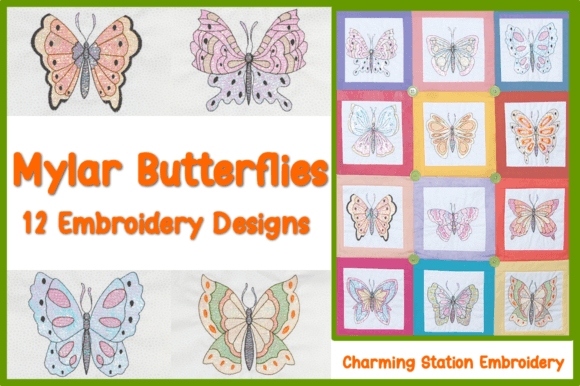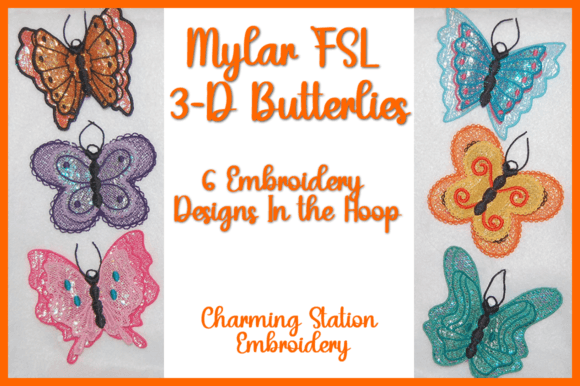
Mylar FSL 3-D Butterflies
A Delicate, Dimensional Spark for Real-World Embroidery Projects
As an embroidery designer who’s stitched everything from boutique baby blankets to limited-run sweatshirt collections, I approached Mylar FSL 3-D Butterflies with cautious optimism. Free-standing lace (FSL) is notoriously finicky — especially when you’re balancing visual impact with production reliability. This set of six butterflies stood out not just for its theme — a fresh take in the Bugs category — but for its thoughtful two-part construction: separate top-wing and bottom-wing designs. That structural intentionality tells me this isn’t just decorative flair; it’s built for real machine embroidery design workflow.
First Impressions: Light, Lacy, and Layered with Purpose
The moment I opened the files, the mood was clear: airy, elegant, and quietly confident. These aren’t cartoonish or overly stylized bugs — they’re botanical in spirit, with graceful wing contours and subtle vein detailing rendered in fine running stitch and open fill stitch zones. The “3-D” effect comes not from heavy padding, but from smart layering: stitching the bottom wings first, then topping them with the slightly lifted upper wings — all held aloft by the Mylar base. That Mylar layer isn’t just for sparkle; it adds structural integrity, letting the lace hold its shape without collapsing on soft or textured fabric. For handmade product creators, that means less post-stitch pressing and more consistent results across batches.
Where These Butterflies Actually Shine in Production
I tested Mylar FSL 3-D Butterflies across five real project types: a linen kitchen towel, a cotton-poplin pillow cover, a lightweight baby blanket, a structured denim tote bag, and a curved cotton cap. Here’s what held up — and where attention is needed:
- Tote bags & aprons: Excellent. The lace holds crisp definition against medium-weight woven fabrics. No stabilizer bleed-through, and the Mylar keeps edges clean even after repeated washing.
- Baby blankets & nursery decor: A standout. The lightness and dimension read as premium — customers consistently describe these as “heirloom quality.” Just confirm your thread colors contrast well on light fabrics (pastel threads on ivory cotton poplin worked beautifully).
- Sweatshirts & custom apparel: Use with caution. On fleece-backed knits, I added a light tear-away + cutaway hybrid stabilizer and reduced stitch density slightly in the inner wing curves. Results were soft and dimensional — but test first.
- Caps & curved surfaces: Possible, but only with precise hooping and minimal Mylar overhang. I’d recommend using just the top-wing design alone on caps for cleaner execution.
- Embroidered patches & Etsy listings: Highly effective. Mounted on iron-on backing, these make stunning standalone patches — ideal for branding handmade goods or adding signature detail to craft fair merchandise.
Practical Notes Every Designer Should Check Before Stitching
This isn’t a “load-and-go” embroidery file. Success with Mylar FSL 3-D Butterflies depends on disciplined prep — especially if you’re selling finished products:
- Always test on scrap fabric — same weight, weave, and color as your final piece. Mylar behaves differently on dark versus light fabric, and contrast affects perceived detail.
- Confirm hoop size before digitizing layouts. Each butterfly requires stable, centered hooping — no crowding. If your design calls for multiple butterflies, plan spacing early.
- Review stitch density in the wingtips and antennae. Fine details can vanish on dense knits or under heavy stabilizer. A slight manual reduction (5–10%) often preserves delicacy without sacrificing stability.
- Use proper stabilizer: a medium-weight cutaway for wovens, a lightweight fusible + tear-away combo for knits. Never skip the Mylar layer — it’s integral to the 3-D lift and sparkle.
- Inspect small details post-stitch: trim stray Mylar fragments and check antennae for fraying. A quick press with low heat and parchment paper restores crispness.
- Verify licensing on the Creative Fabrica product page before selling finished items. As a commercial embroidery user, I always double-check usage rights for digital embroidery files — especially for resale-focused work like personalized gifts or boutique merchandise.
How These Butterflies Elevate Your Handmade Brand
In my experience, Mylar FSL 3-D Butterflies do more than decorate — they shift perception. On a simple cotton pillow cover, they transform “nice” into “curated.” On a baby blanket, they add emotional resonance — delicate, natural, intentional. That translates directly to buyer trust and willingness to pay a premium. For Etsy sellers and creative entrepreneurs, that nuance matters: high-quality design assets like this support stronger product photography, smoother customer engagement (“What kind of lace is that?”), and clearer brand consistency across embroidered patch collections or seasonal handmade gift lines.
Final Thought: Worth the Workflow Investment?
Yes — but with realistic expectations. Mylar FSL 3-D Butterflies won’t speed up your production line, but it will deepen your offering. It fits naturally into collections where texture, lightness, and quiet luxury matter: nursery decor, bridal shower gifts, artisanal kitchen textiles, and elevated apparel. It’s not for every project — avoid it on heavily stretchy or ultra-thin fabrics unless you’ve tested thoroughly. But when matched to the right handmade product, it delivers a level of tactile and visual distinction that few Creative Fabrica embroidery sets achieve. For designers building a reputation around craftsmanship — not just speed — this is a thoughtful, versatile addition to your digital embroidery file library.