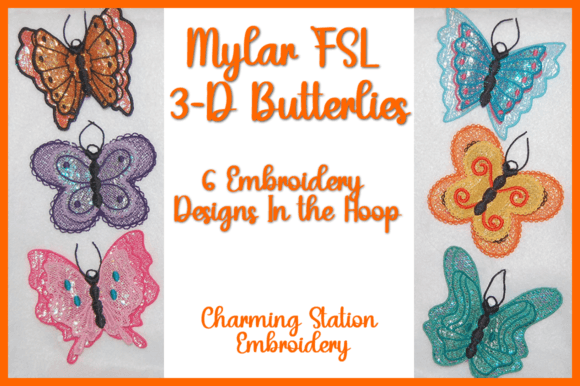
Mylar Butterflies
First Impression: Delicate, Sparkling, and Instantly Marketable
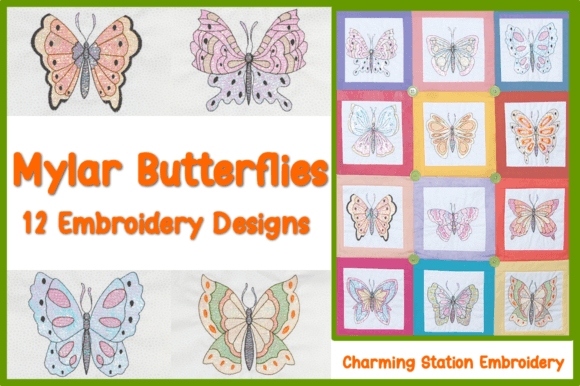
As an embroidery designer who’s curated over 200 craft fair booths—and shipped thousands of finished products to Etsy sellers and boutique makers—I opened Mylar Butterflies expecting charm. What I got was something sharper: a set that feels both whimsical and intentional. The title alone signals premium material (Mylar) and natural elegance (butterflies), while the description confirms versatility—12 distinct designs, quilt-ready scale, yet equally effective as a single statement on a sweatshirt. It reads as modern-farmhouse meets artisan-luxe: not overly sweet, not clinical, not trendy in a fleeting way. That balance is gold for handmade markets.
Where Mylar Butterflies Shines On Real Craft Fair Products
This isn’t just another bug-themed embroidery file—it’s a visual anchor. At a crowded booth, Mylar Butterflies stands out because it catches light. Mylar reflects subtly, adding dimension you simply can’t replicate with standard thread. Here’s where it performs strongest:
- Tote bags: One centered butterfly on a natural canvas tote reads as elevated, not crafty—ideal for shoppers seeking “handmade but refined.”
- Aprons: A single butterfly near the pocket or along the strap adds personality without overwhelming function.
- Tea towel embroidery: Works beautifully on linen or cotton twill—especially when placed off-center above the hem. The shimmer reads even under market tent lighting.
- Embroidered patches: Each of the 12 designs scales cleanly into a 3–4” patch. Perfect for layering on denim jackets or gift-wrapping small pouches.
- Pillow covers & lap quilts: This is where the full set earns its keep. Twelve coordinated but non-identical butterflies create rhythm and movement—far more engaging than repeating one motif.
It’s less effective on curved surfaces like caps (unless simplified to 1–2 large-scale versions) or ultra-dense fabrics like heavy duck canvas—more on that below.
What Makes Mylar Butterflies Sell—Beyond the Sparkle
Customers don’t buy Mylar—they buy *feeling*. And this design delivers three key emotional hooks at craft fairs: nostalgia (butterflies = childhood summers), craftsmanship (the Mylar implies intentionality), and giftable ease (a butterfly says “thoughtful,” not “generic”). As an Etsy seller or small shop product, Mylar Butterflies photographs exceptionally well—clean lines, high contrast potential, and built-in texture from the reflective surface. That means fewer retakes, faster mockup creation, and stronger printable mockups for your listings.
For batch production? It’s highly repeatable. No tiny lettering, no dense micro-stitching, no gradients that require specialty thread changes. Each butterfly is self-contained, balanced in stitch density, and designed for clarity across sizes. That translates to faster hooping, fewer restarts, and consistent quality—even across different fabric types.
Careful-Use Notes Every Embroidery Designer Should Check
Don’t skip testing—especially with Mylar. Here’s what demands attention before cutting fabric:
- Fabric texture matters: On heavily textured tea towels or bouclé pouches, fine wing details may blur. Opt for medium-weight cotton or linen blends for best definition.
- Dark fabric contrast: Mylar shines brightest against mid-to-light backgrounds. On charcoal or navy, pair with bright white or metallic silver thread to maintain legibility.
- Hoop size & spacing: Since there are 12 designs, verify they fit comfortably within your most-used hoop (e.g., 5x7” or 6x10”). Tight spacing between elements could cause registration drift during multi-position hooping.
- Stabilizer choice: Use cutaway + tear-away combo for structured items like tote bags; lightweight fusible for tea towels and pillow covers. Mylar adds weight—under-stabilizing risks puckering.
- Small-scale clarity: While beautiful at 4–5”, avoid shrinking any butterfly below 2.5”. Delicate antennae and wing veins may collapse or stitch poorly on dense stabilizer.
How Mylar Butterflies Strengthens Your Brand & Booth Presence
In a sea of floral motifs and typography, Mylar Butterflies adds quiet sophistication. It supports brand consistency whether you’re known for earthy minimalism or joyful maximalism—because it’s adaptable, not prescriptive. On your display table, a quilt sample with all 12 butterflies draws eyes from six feet away. A single embroidered sweatshirt hanging beside hand-dyed yarns tells a cohesive story: intentional, nature-inspired, handmade with care.
Buyer engagement spikes here too. Shoppers linger longer when they see subtle movement—like light catching Mylar wings as they walk past. That pause creates opportunity: a question, a story about sourcing, a chance to upsell a matching patch or tea towel set.
Pro Designer Checklist Before You Produce
Before stitching your first Mylar Butterflies finished product, do these six things:
- Test the machine embroidery design on scrap fabric matching your target product (e.g., canvas for totes, terry for towels).
- Check thread colors against your base fabric—especially for contrast on darks or tonal harmony on creams.
- Review spacing between elements if grouping multiple butterflies (e.g., on a lap quilt panel).
- Confirm hoop size compatibility—don’t assume all 12 fit your standard hoop without measuring.
- Inspect stitch density in wingtips and antennae—adjust tension if needed to prevent skipped stitches.
- Create at least one real mockup (not just digital). Drape it, hold it in natural light, photograph it next to your other bestsellers.
And crucially: verify commercial licensing terms. As a digital embroidery file sold for resale, Mylar Butterflies must be cleared for use on craft fair products, Etsy listings, and other commercial embroidery applications. When in doubt, contact the designer or vendor directly—never assume.
Final Thought: A Quiet Powerhouse for Handmade Sellers
Mylar Butterflies isn’t flashy—but it’s memorable. It doesn’t shout; it glimmers. For embroidery business owners building a catalog of small shop products, for Cricut crafters expanding into stitched goods, for Etsy sellers refreshing their spring lineup—this is the kind of Bugs category design that converts browsers into buyers. Not because it’s loud, but because it feels *considered*. And in handmade markets, that’s the highest compliment.