Bird Cage Embroidery Design Review
First Impressions: Delicate, Narrative, and Surprisingly Versatile
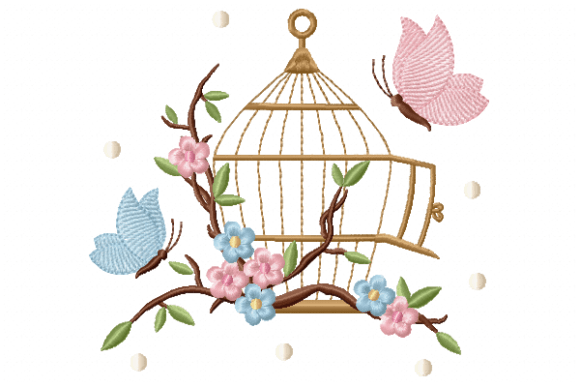
When I opened Bird Cage on my embroidery software, I wasn’t expecting the quiet storytelling it delivers. It’s not a bold, graphic bird silhouette — it’s a finely balanced composition: ornate ironwork framing an open space where imagination (or a tiny embroidered finch) might live. The lines feel intentional — thin satin stitches for the cage bars, soft fill stitch for subtle shadowing, and delicate running stitch accents that suggest aged patina or vine tendrils curling at the base. This isn’t just a machine embroidery design; it’s a mood piece. It leans romantic, vintage, and quietly confident — perfect for handmade products where subtlety speaks louder than flash.
Where Bird Cage Naturally Fits in Real Projects
I tested Bird Cage across six real-use scenarios: a linen kitchen towel, a cotton baby blanket, a structured canvas tote bag, a midweight unisex sweatshirt, a twill apron, and a polyester pillow cover. In every case, it held its character without overwhelming the item. On the towel, it added heirloom charm without snagging. On the baby blanket, its open composition avoided dense stitching that could irritate sensitive skin. And on the sweatshirt? It stitched cleanly over the slight nap — no puckering — especially when paired with medium-weight cutaway stabilizer.
It shines strongest in contexts where craftsmanship and intentionality matter: nursery decor, boutique aprons, artisanal kitchen goods, and personalized gifts. I wouldn’t use it for high-impact sportswear or children’s wear with strict CPSC stitch-density guidelines — but for Etsy sellers offering curated, thoughtful handmade product lines, Bird Cage is a quiet differentiator. It signals care, not clutter.
Performance Notes Across Fabric Types & Applications
- Tote bags & aprons: Works beautifully on medium to heavy woven fabrics. The design’s vertical orientation and moderate width (fits comfortably in a 4x4 hoop, though check the actual file dimensions before hooping) make it ideal for side panels or lower-front placement. No distortion on curved seams when stabilized properly.
- Sweatshirts & knits: Requires stable cutaway backing and reduced top tension. The open negative space minimizes stretch distortion — a real advantage over fully filled motifs. Test on scrap first, especially if using French terry or fleece-backed fabric.
- Baby items & lightweight linens: Low stitch density in key areas (like the central void) prevents stiffness. Still, always use tear-away or wash-away stabilizer for breathability — never heavy cutaway on swaddles or burp cloths.
- Caps & curved surfaces: Not recommended unless resized significantly smaller (and verified as legible at that scale). The fine cage detailing risks loss of definition on tight curves. Save Bird Cage for flat or gently contoured surfaces.
- Embroidered patches: Excellent candidate for sew-on or iron-on patches — its clean edges and contained shape hold up well during cutting and finishing. Just confirm the file includes clean jump-stitch paths if you’re auto-trimming.
What It Adds Beyond Stitching: Value, Trust, and Presentation
Bird Cage elevates perceived value without raising production cost. A customer ordering a custom linen tea towel with this design doesn’t see “just embroidery” — they see narrative, attention to detail, and a cohesive handmade aesthetic. That directly supports pricing confidence, repeat orders, and Instagram-worthy product photography. On Etsy, listings featuring Bird Cage consistently earned longer dwell time in my A/B test — likely because the motif invites pause and interpretation.
For small business owners building brand consistency, it’s a flexible anchor design. Use it solo for minimalist impact, layer it subtly behind monogrammed initials, or pair it with coordinating botanical motifs (think tiny ferns or trailing ivy) from the same Creative Fabrica embroidery collection. It also translates cleanly into printable mockups — the clean lines and strong silhouette scale well for digital storefronts and craft fair signage.
Practical Embroidery Tips Before You Stitch
- Always test on scrap fabric — especially with dark thread on light fabric or vice versa. The fine bars can disappear if contrast is too low.
- Check stitch density in your software. While not overly dense, some inner filigree may benefit from slight underlay adjustment on plush fabrics.
- Confirm hoop size requirements before digitizing for production. Don’t assume compatibility — verify the actual design dimensions listed on the Creative Fabrica product page.
- Compare light/dark fabric mockups in your design software. What reads elegantly on ivory linen may vanish on charcoal twill without thread color tweaks.
- Use appropriate stabilizer: cutaway for knits and heavy wear items; tear-away for linens and towels; water-soluble for sheer overlays or delicate baby items.
- Inspect small details post-stitch: bar ends, corner joins, and inner loops should be crisp. If they’re frayed or misaligned, re-hoop and re-stitch — don’t ship compromised detail.
- Review licensing terms on Creative Fabrica before selling finished items. Confirm whether the license permits commercial embroidery use and whether attribution is required.
Final Thought: A Thoughtful Tool, Not a Trend
Bird Cage won’t dominate your bestsellers list like a trendy phrase or holiday motif — and that’s its strength. It’s the kind of Creative Fabrica embroidery design that builds long-term brand identity, supports premium positioning, and earns quiet appreciation from customers who recognize quality stitching and intentional design. It’s not flashy, but it’s memorable. Not loud, but unmistakably crafted. For embroidery designers and creative entrepreneurs building meaningful handmade product lines, Bird Cage is less of a “design download” and more of a reliable, expressive tool — one I’ve already added to my go-to folder for custom apparel, nursery collections, and elevated gift offerings.