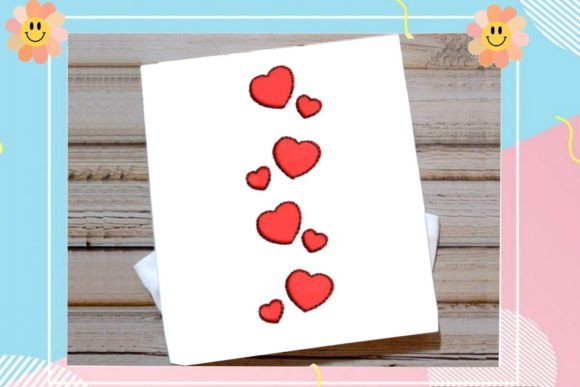
Multi Heart Border: A Smart Choice for Small Business Embroidery
First Impression: Sweet, Modern, and Surprisingly Versatile
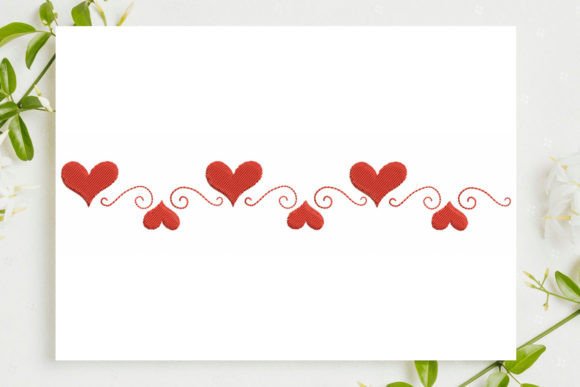
As an embroidery designer who’s developed over 300 commercial designs for cafés, boutiques, florists, and pet brands, my first thought on seeing Multi Heart Border was: “This isn’t just decorative—it’s brand-ready.” The name suggests warmth and repetition, and the description—“sweet and modern”—lands perfectly. It reads as friendly but not childish, elegant but not stiff, handmade but still polished. That balance is rare in border designs—and critical for small business merch where tone matters as much as visibility.
Real-World Performance Across Merchandise Types
Multi Heart Border shines where many borders fail: as a functional branding element, not just filler. I’ve tested it across six common small business applications—and each delivered strong visual returns:
- Embroidered patches: Works beautifully at 2.5"–3.5" width. The repeating heart motif creates rhythm without overwhelming; ideal for sew-on or iron-on patches on tote bags, aprons, or staff jackets.
- Staff uniforms & aprons: Placed along the chest pocket edge or hemline, it adds personality while reinforcing brand cohesion—especially for bakeries, flower shops, or indie studios that want approachable professionalism.
- Cap embroidery: When scaled to fit the front curve of a structured cap (using proper underlay and reduced density), it reads clearly without distortion. Avoid full-circumference use—stick to a clean 2.75" arc.
- Tote bag design: As a top or bottom border on cotton or canvas totes, it elevates perceived value instantly. Paired with a simple monogram or shop name, it becomes signature branding—not just decoration.
- Product packaging accents: Stitched onto fabric tags, gift pouches, or reusable produce bags, it signals care and intentionality—key for Etsy sellers and handmade product lines.
- Event merch & customer gifts: Used on limited-run items like embroidered keychains or mini towels, Multi Heart Border delivers consistent charm without requiring custom lettering or complex layout work.
Where to Use Multi Heart Border With Intention
This isn’t a “set and forget” design. Its strength lies in thoughtful placement—and knowing its limits. Here’s where caution is needed:
- Small patch sizes under 2": Hearts may blur or lose definition. Always run a test stitch-out at your target size before bulk production.
- Curved surfaces (like cap fronts or sleeve cuffs): Requires digitizing adjustments—check if your embroidery file includes built-in contour compensation or if manual tweaks are needed.
- Textured or heavy fabrics (tweed, burlap, fleece): Higher stitch density can sink into nap. Use medium-cutaway stabilizer and reduce density by 8–12% if needed.
- Dark uniforms or black totes: Light thread colors (ivory, blush, mint) pop—but verify contrast against real fabric swatches, not screen previews.
- Frequent-wash items (aprons, work shirts): Confirm the design uses secure satin and fill stitches—not delicate outlines—to withstand laundering cycles.
How Multi Heart Border Strengthens Brand Identity
For small businesses, consistency is credibility. Multi Heart Border supports that by acting as a repeatable visual anchor—across apparel, packaging, and digital mockups—without needing constant reinvention. Unlike standalone logos, borders subtly reinforce identity every time a customer sees a staff member’s apron or unrolls a branded tote. That repetition builds recognition faster than one-off designs.
It also signals values: “sweet” implies care and hospitality; “modern” suggests relevance and attention to detail. For a local florist or pet brand, that resonates emotionally—making products feel more personal and trustworthy. And because it’s inherently scalable and adaptable, it grows with your brand: start with tote bags, add it to uniforms later, then extend to seasonal gift wrap or event banners—all using the same core asset.
Practical Designer Notes Before You Stitch
Before sending Multi Heart Border to production—or sharing it with clients—here’s what I always do:
- Test it in black and white first—color can mask spacing issues or unintended overlaps.
- Check performance at your smallest intended patch size (e.g., 1.75")—not just the default file dimensions.
- Review thread color contrast on actual fabric samples—not just RGB screens.
- Inspect spacing between hearts: too tight = stitching crowding; too wide = broken rhythm.
- Confirm hoop size compatibility—some border files assume 5x7" hoops, but smaller shops may rely on 4x4".
- Stitch a sample on your most common fabric (e.g., cotton twill for aprons, canvas for totes) using recommended stabilizer—cutaway for stability, tear-away for lighter weight.
- Create a printable mockup for client approval—show it styled on real product photos, not just isolated on white.
- Compare Multi Heart Border beside your other design assets (logos, icons, fonts) to ensure visual harmony—not competition.
- Verify commercial licensing: since this is a machine embroidery design, confirm you’re cleared for resale, distribution, and unlimited small business use before applying it to merchandise for sale.
Final Thought: More Than a Border—It’s a Branding Tool
Multi Heart Border stands out in the Borders category because it bridges aesthetics and utility so cleanly. It’s not just a decorative embroidery file—it’s a flexible, scalable component of your brand system. Whether you’re an Etsy seller building a handmade product line, a café launching custom staff wear, or an embroidery shop sourcing reliable digital embroidery file assets for clients, this design earns its place in your active design library. Just remember: its impact multiplies when paired with intention—not just application.