Bloodhound Embroidery Design Review
First Impressions: A Calm, Confident Presence
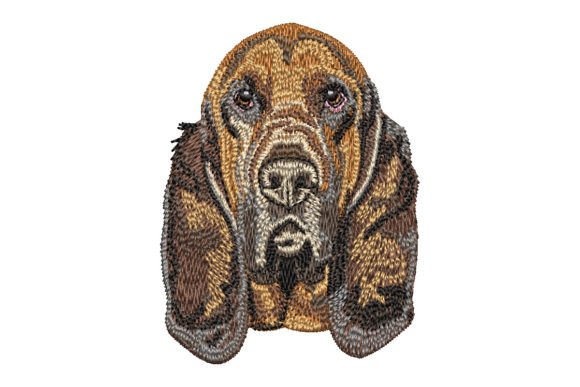
When I opened the Bloodhound embroidery file, what struck me wasn’t just accuracy—it was *presence*. This isn’t a cartoonish dog or a generic silhouette. It’s a grounded, soulful representation of the breed: heavy jowls, soft-set eyes, that distinctive loose skin around the neck—all rendered with thoughtful line weight and balanced negative space. The design breathes. It feels like something you’d want to stitch on a linen tea towel for a dog-loving friend, not just drop into a mass-produced tote bag.
Real Project Test: Custom Embroidered Baby Blanket
Last week, I used Bloodhound on a 30" x 30" organic cotton baby blanket—intended as a personalized gift for a new parent whose family has bred Bloodhounds for three generations. I chose a medium hoop size and paired it with tear-away stabilizer (lightweight, since the fabric wasn’t overly dense). The result? Clean satin-stitched outlines held beautifully, and the fill stitches in the ears and muzzle had just enough texture—not so dense it felt stiff, not so sparse it looked unfinished. Parents loved the quiet dignity of it; one said, “It looks like our old girl, but better.” That’s the mark of a strong machine embroidery design: it resonates emotionally without overcomplicating the stitch path.
Where Bloodhound Shines (and Where It Needs Care)
Bloodhound excels on stable, medium-weight fabrics: canvas tote bags, brushed cotton sweatshirts, linen aprons, and pillow covers. Its moderate detail level means it reads clearly at 4–5 inches wide—ideal for chest embroidery on adult tees or centered placement on kitchen towels. As a tote bag design, it adds warmth and character without overwhelming the item. On a boutique apron for a local pet bakery? Perfect. It signals craft, care, and niche appeal.
But—and this matters—I wouldn’t push Bloodhound onto ultra-thin jersey or heavily textured terry cloth without testing. The subtle folds around the nose and the layered ear structure rely on consistent fabric tension. On stretchy fabric, those satin-stitched curves can pucker if stabilizer isn’t precisely matched. Likewise, avoid placing it directly over seams or curved surfaces like cap fronts unless you’ve confirmed the design’s outer shape fits comfortably within your hoop’s active stitching area. Small hoops (under 4") will lose definition in the eye detail and lower jaw—so check your hoop size before digitizing for production.
Performance Across Common Use Cases
- Custom apparel: Works reliably on cotton-blend sweatshirts and midweight tees. Avoid high-heat transfers near the design—some satin-stitch areas may shift under direct iron contact.
- Baby embroidery: Gentle, non-bulky, and soothing in tone—ideal for onesies and burp cloths when stitched with soft poly thread.
- Embroidered patch: Holds up well when finished with merrow edging, though the lower face details require clean trimming. Not ideal for tiny 1.5" patches—scale down only if your digitizing software preserves key contours.
- Holiday embroidery: Surprisingly versatile for autumn gifting—pair it with muted olive or rust thread on cream flannel for a cozy, timeless feel.
- Commercial embroidery: Clients respond well to its authenticity. It reads as handmade, not clip-art. That builds trust—especially for Etsy sellers marketing premium personalized gift collections.
Design Assets That Support Your Craft Business
If you’re curating digital product listings—say, a themed “Herding & Hound” bundle on Etsy—Bloodhound adds serious credibility. It doesn’t scream “mass-produced.” Its proportions, balance, and restrained detail suggest professional digitizing, which elevates how buyers perceive your entire shop. When used in printable mockups for social media or your website, it photographs cleanly against both light and dark backgrounds—just test your thread colors first. A charcoal gray on oatmeal linen reads rich and warm; the same thread on black fabric fades slightly unless you add an underlay stitch (check your file settings).
Practical Notes Every Designer Should Run Through
- Always run a test stitch on scrap fabric matching your final project’s weight and weave.
- Review stitch density in the muzzle and ear areas—too dense = stiffness; too sparse = loss of expression.
- Compare how it looks in black-and-white mockups. Does the silhouette hold? With Bloodhound, it does—meaning it’ll translate well across branding applications.
- Check whether your version includes alternate formats (e.g., PES, DST, JEF) and confirm compatibility with your machine before listing it for sale.
- Verify licensing terms. If you plan to sell finished items (like embroidered caps or blankets), ensure the digital embroidery file permits commercial use. If reselling the file itself, confirm redistribution rights.
- Use appropriate stabilizer: lightweight cutaway for knits, tear-away for stable wovens, and fusible for lightweight linens where backing must stay invisible.
A Final Thought for Makers
Bloodhound isn’t flashy—but that’s its strength. In a market saturated with over-digitized, hyper-detailed animal motifs, this design trusts the viewer to read subtlety. It supports your voice as a designer, not drowns it. Whether you’re stitching a single nursery pillow cover or building a full line of dog-themed small shop products, it brings consistency, calm, and quiet professionalism. It reminds customers—and you—that great embroidery project work isn’t about how much you can fit in. It’s about what you choose to let speak.